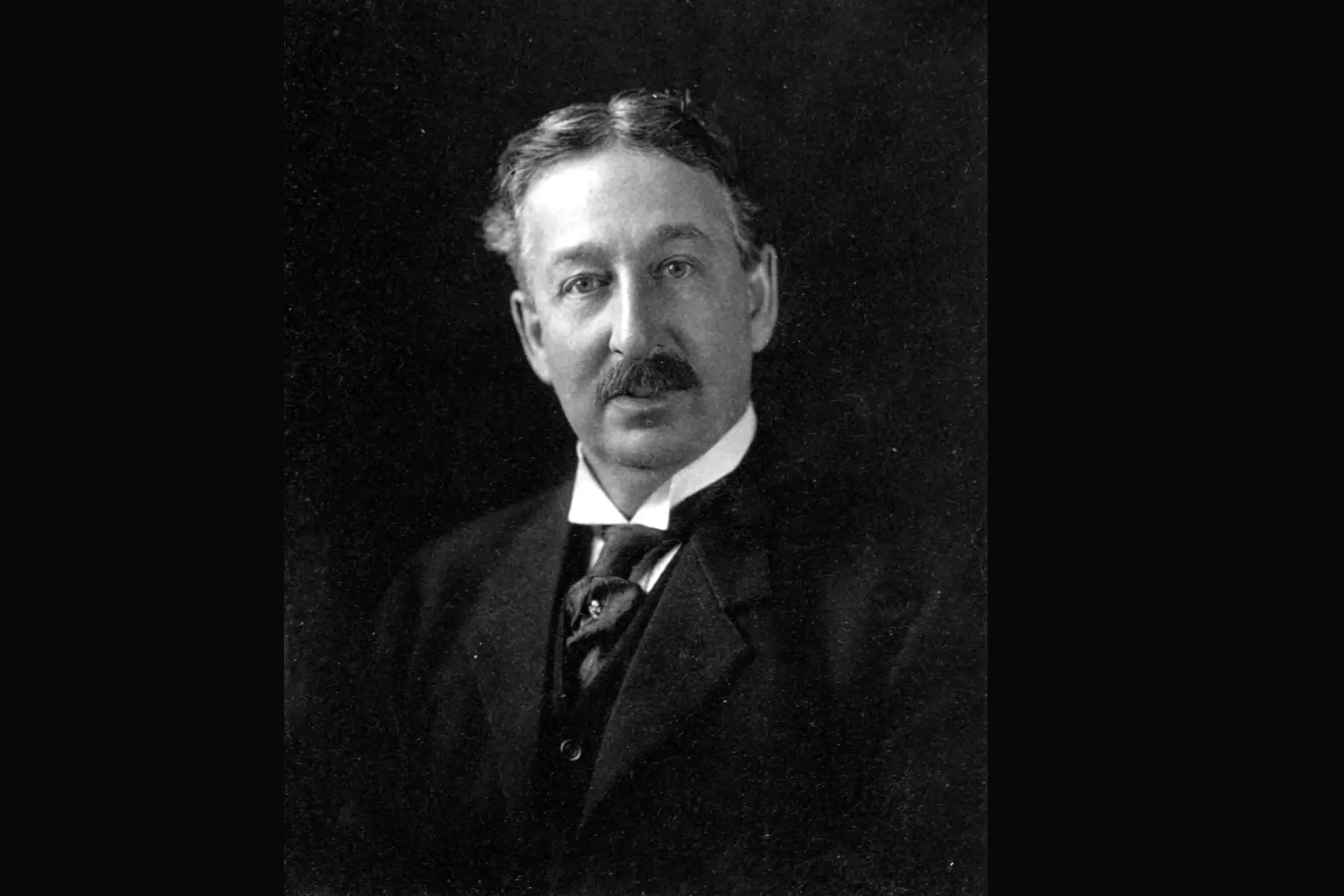
Although he was born in London, his family moved to New York when he was just 1 year old. After several years of poverty and the death of his father, he graduated from Columbia University at just 20. Despite receiving several job offers, he decided to take a job on Wall Street and later founded the Graham-Newman Partnership. By 1949 he published his most acclaimed work, The Intelligent Investor.This work had several editions, the last one was published in 2003. This edition includes the prologue and appendix written by Warren Buffett himself, who speaks of this book as "The best book on investing ever written."

How Benjamin Graham Invested
While both books mentioned above, Security Analysis and Intelligent Investor, are excellent works, I personally recommend the latter more, as it is much easier to understand. In particular, Jason Zweig's commentary in the latest edition is very enriching, as he applies the concepts described to modern times, giving concrete examples that may be more familiar to us.
Graham argued that achieving good investment results depended on taking the time to analyze which companies are currently undervalued and betting on them for the long term., hoping the market would adjust for this imbalance. Some of the rules he followed were as follows:
- Bet on the Long Term. Graham frequently refers to those seeking quick profits as "speculators." An investor's analysis must include future prospects, which will eventually correct this distortion between true value and current price.
- Bet on a P/E less than 10. The P stands for Price and the E stands for Earnings. Therefore, it is the division between the company's total market price and earnings. Typically, the calculation is based on the last year's earnings, but Graham recommended calculating it based on the average of the last five years. It's important to clarify that in Argentina we couldn't do this without adjusting earnings for inflation, since if we think back five years with values in pesos, we would have ridiculous values (for example, for $100 per person you could have dinner at a restaurant).
- A true investor is one who is considered the owner of the company, Therefore, he is very interested in how he allocates his profits, in increasing his profits, and in ultimately making them profitable. He doesn't mind having to wait to realize his profits. Graham defines investment as an operation that, after thorough analysis, promises security and adequate returns.
- Passive investors and active investors. Passive investors are those who seek to avoid losses or serious mistakes. They can't spend a lot of time selecting assets and try to make as few mistakes as possible. In contrast, active or entrepreneurial investors are those who spend a lot of time researching the best investment options to, of course, achieve better returns. According to Graham, with patience and effort, they can achieve profits above the market average.
- The market is a manic depressive. A very apt allegory he makes is that Mr. Market is someone of these characteristics, who knocks on our door every day offering to buy our house. Some days he's euphoric and offers us tons of money, more than it's actually worth. Other days, he offers us extremely little. A good investor shouldn't worry about the errors of judgment others make; rather, they should take advantage of these cycles to buy from him at low prices and sell to him at high prices.
- Margin of safety. Investors must understand that valuation calculations will never be exact, so they must ensure that there is a substantial difference between what they pay and what they receive. To give a practical example, it would be illogical to pay 95 for something we believe is worth 100. It would be very different if we paid 50 for the same thing. By buying stocks that are significantly undervalued, you ensure you don't lose a lot of money, since short-term fluctuations are unpredictable. The cheaper a stock is, the greater the margin of safety it provides.
- Common sense. The investment philosophy he advocates is based on logic. In fact, he wrote that if he wants “to achieve consistently better-than-average results, the investor must pursue policies that are (1) inherently sound, sound, and promising, and (2) unpopular with the stock market.” (Quoted from The Intelligent Investor, p. 49)
- Inflation is the investor's greatest enemy, and the best way to protect yourself from it is through investing in stocks.
- Investors should diversify appropriately, including bonds and stocks in their portfolio. He recommends allocating between 25% and 75% of each, depending on market conditions. Under normal circumstances, the allocation would be half bonds and half stocks; in a bull market with few stocks with a margin of safety, the amount of bonds in the portfolio should be up to 75% of the total. But in a bear market and opportunities abound, we could adjust this to a maximum of 75% of the total in stocks.
- Understanding the relationship between market fluctuations and the investorChapter 8 of The Intelligent Investor (5th Ed. 2003), my personal favorite, and surely the most important, contains a gem on page 232:
However, this important fact must be taken into account:
A true investor is practically never forced to sell his
actions, and, except in those rare moments when he might be forced
for sale, it is in perfect condition to ignore the quote
current. You will need to pay attention to the quotes and carry out some intervention
only to the extent that it suits you, and no more.Therefore, the investor who allows himself to be dragged into the stampedes or
to be unduly concerned about unjustified retractions
market-induced changes in their portfolios will be transforming
perversely turns its basic advantage into an essential disadvantage. It is about
people who would be better off if their shares were not listed at all because
They could be freed from the mental anguish caused by errors in judgment
committed by other people.

The indelible legacy of Benjamin Graham
Benjamin Graham, often considered the father of value investing, left an indelible mark on the investment world. His rational and disciplined approach to stock selection, based on a deep analysis of their intrinsic values rather than following market trends, has inspired generations of investors (myself included).
Graham's impact on the investment world
- Warren Buffett: One of Graham's most famous disciples, Warren Buffett, has built a fortune following his mentor's principles. Buffett's Berkshire Hathaway company is the best example of how value investing can generate extraordinary long-term returns.
- The School of Courage: Graham established a school of thought that has influenced generations of investors. Many of the world's most successful fund managers consider themselves followers of Graham.
- The S&P 500 Index: Although Graham was a critic of market indices, the long-term success of the S&P 500 has somewhat validated his approach. Many of the companies that make up the index are solid companies with attractive valuations.

Relevance of Value Investing Today
Despite the growing popularity of passive investments and quantitative approaches, Value investing remains a valid and effective strategy. However, the investment environment has changed significantly since Graham's time. Modern investors must adapt to new challenges, such as:
- The proliferation of complex financial products: Derivatives, exchange-traded funds (ETFs), and other financial instruments can complicate the task of assessing a company's intrinsic value.
- The influence of social media and news: Information spreads faster than ever, which can create market volatility and make rational decision-making difficult. Generally, when a company is undervalued, investors are able to recognize it more quickly, although this is not always the case.
- The emergence of new sectors: Technology, biotechnology, and other emerging sectors pose new challenges for value investors.