
The story of Volkswagen It is fascinating and complex, full of industrial advances, innovation, and achievements that have made it one of the world's most important automobile manufacturers. However, it also has a controversial origin, linked to the Nazi regime in the Germany in the 1930sVolkswagen has evolved enormously since its creation, adapting to the times and facing great challenges that have tested its integrity and commitment to the corporate responsibilityNext, we'll explore the founding of Volkswagen, its relationship with the Nazi regime, its evolution over the decades, and how the company has worked to become a symbol of efficiency, quality, and responsibility.
The Beginnings of Volkswagen: The Vision of a "People's Car"
In the interwar period, Germany was experiencing a profound economic recession after the defeat in the First World War and the consequences of the Treaty of Versailles. In this context, the figure of Adolf Hitler, who, in his campaign of expansion and control over the German economy, wanted to create a “people's car” (Volkswagen in German). The goal was to offer an affordable, good quality, low-cost car so that the German working class could have their own means of transportation, similar to the Ford Model T that had revolutionized the United States.
In 1936, the Nazi regime signed a contract with the engineer Ferdinand Porsche to design a vehicle that would meet Hitler's requirements: a robust, economical car capable of transporting a family of four. Porsche designed the Kraft-through-Freude-Car (KDF-Wagen), also known as the Beetle (Volkswagen Beetle). This car was conceived as a symbol of prosperity for the population, although it was also used as a propaganda tool for the Third Reich.
The Controversial Relationship with the Nazi Regime
The founding of Volkswagen and the construction of its first plant in Wolfsburg were strongly linked to the Nazi regimeThe company was created in 1936 under the name Gesellschaft zur Vorbereitung des Deutschen Volkswagens mbH, and was soon renamed to Volkswagenwerk GmbHTo finance the project, the Nazi government established a savings scheme in which citizens could contribute weekly and, in theory, receive their car once the payment was completed. However, most of the citizens who saved never saw their car, since with the outbreak of the World War II in 1939, production was diverted to the manufacture of military vehicles.
During the war, Volkswagen not only shifted its production to vehicles and weapons for the German army, but also turned to the hard labor, a common practice in many companies under the Nazi regime. It is estimated that thousands of forced laborers, prisoners of war, and concentration camp inmates worked in inhumane conditions in Volkswagen factories. This dark chapter in the company's history was the subject of widespread criticism and had legal and moral repercussions that lasted decades later.

The Postwar Period and the Rebirth of Volkswagen
At the end of World War II in 1945, the Volkswagen factory in Wolfsburg was left in ruins, and the company was temporarily administered by the British occupation forcesFaced with a shortage of vehicles in the post-war period, the British officer Ivan Hirst He saw in Volkswagen an opportunity to rebuild an automotive industry for Germany. Under his leadership, production of the Beetle restarted, and the car became a symbol of Germany's postwar economic recovery.
In 1949, the German government took back control of the company and turned it into a state-owned company. Over time, Volkswagen began to grow, expanding throughout Europe and then America. During the 1950s and 1960s, the Beetle became a pop culture icon, especially in the United States, where the car was appreciated for its simple and economical design. This period marked the beginning of Volkswagen's consolidation as one of the world's largest and most successful automobile manufacturers.

Expansion and Diversification: The Era of Classical Models
As Volkswagen grew, the company began to diversify their production and launch new models. In 1950, it introduced the Volkswagen Transporter, known as the “combi,” a vehicle that quickly became a symbol of the counterculture and hippie movement in the United States. In 1961, Volkswagen introduced the Type 3 and, in 1968, the Type 4, which offered more modern and luxurious features, with which Volkswagen sought to reach new market segments.
The company also made strategic acquisitions to strengthen its position. In 1965, Volkswagen acquired Auto Union from Daimler-Benz, a company that would later become Audi. This acquisition allowed Volkswagen to expand its model offering and enter the luxury car segment, consolidating a brand alliance which has allowed it to dominate the European market to this day.
The Beetle Crisis and the Emergence of New Models
In the late 1970s, the Beetle, which had been the emblem of Volkswagen, began to lose popularity Due to competition from more modern vehicles and environmental regulations demanding more efficient engines, Volkswagen, aware of the need to adapt, developed the Volkswagen Golf, launched in 1974. This model marked a significant change for the company and was the beginning of a new era.
The Golf, with its modern and functional design, quickly became a success. This compact established Volkswagen as a manufacturer capable of adapting to the market trends and to meet the demand for more efficient and environmentally friendly vehicles. The Golf, which has gone through several generations and remains one of the best-selling models, helped Volkswagen stay competitive in an increasingly crowded market.
From State-Owned Enterprise to Global Corporation
In 1985, Volkswagen went from being a state-owned company to a public limited company, which gave it greater freedom to make decisions and expand into international markets. During the 1980s and 1990s, the company continued its expansion, acquiring brands such as SEAT in 1986 and Skoda in 1991, consolidating its position as one of the largest automotive groups in Europe.
During this period, Volkswagen also entered the luxury market. 1998, acquired Bentley, Lamborghini and Bugatti, expanding its brand portfolio and diversifying its market. These acquisitions demonstrated Volkswagen's ability to manage and grow brands in different segments, from economy cars to luxury and high-end vehicles.

The Emissions Scandal and Corporate Responsibility
One of the most critical moments in the history of Volkswagen was the 2015 emissions scandalIn September of that year, the Environmental Protection Agency (EPA) from the United States revealed that Volkswagen had installed software in its diesel vehicles that allowed them pass emissions tests without actually meeting environmental standards. This software altered test results, showing lower emission levels than they actually were.
The scandal, known as "Dieselgate," had a devastating impact on Volkswagen's reputation and cost it billions of dollars in fines, compensation, and lawsuits. It also sparked a global debate on ethics and corporate responsibility in the automotive industry. Volkswagen was forced to implement profound changes in its operations and commit to a sustainability strategy that includes the development of electric vehicles and clean technologies.
The Importance of Corporate Responsibility and Lessons Learned
The history of Volkswagen shows how a company can overcome the toughest challenges and how the corporate responsibility is essential to building a trusted and sustainable brand. Throughout its history, Volkswagen has learned valuable lessons about importance of transparency, ethics and commitment to the environment.
Dieselgate showed that companies cannot put profits above integrity and social responsibilityVolkswagen has worked hard to restore its reputation through significant investments in electric vehicles and sustainability programs. The company has launched the initiative Volkswagen ID, a line of electric vehicles that seeks to compete in the sustainable car market and reduce the carbon footprint of the company.
Volkswagen has also strengthened its policies corporate ethics, creating internal teams to ensure that regulations are respected and that decisions are made based on values of integrity. This commitment is essential to maintaining consumer and investor confidence, especially in a market where consumers are increasingly aware of the importance of environmental and social responsibility.
Conclusion: Volkswagen Today and Its Path to the Future
Volkswagen has come a long way since its founding in Nazi Germany. The company has evolved from a propaganda symbol to a global corporation, and has faced numerous challenges that have tested its integrityToday, Volkswagen strives to become a leader in the electric vehicle market, committed to a more sustainable future with corporate responsibility as one of its fundamental pillars.
Volkswagen's history teaches us that companies can evolve and adapt, even when faced with major controversies and challenges. corporate responsibility is crucial to building a sustainable brand, and Volkswagen is an example of how a company can learn from its mistakes and work to be part of the solution rather than contributing to the problem.
Both you and your company can also invest in quality companies.
See more notes from our blog:
-

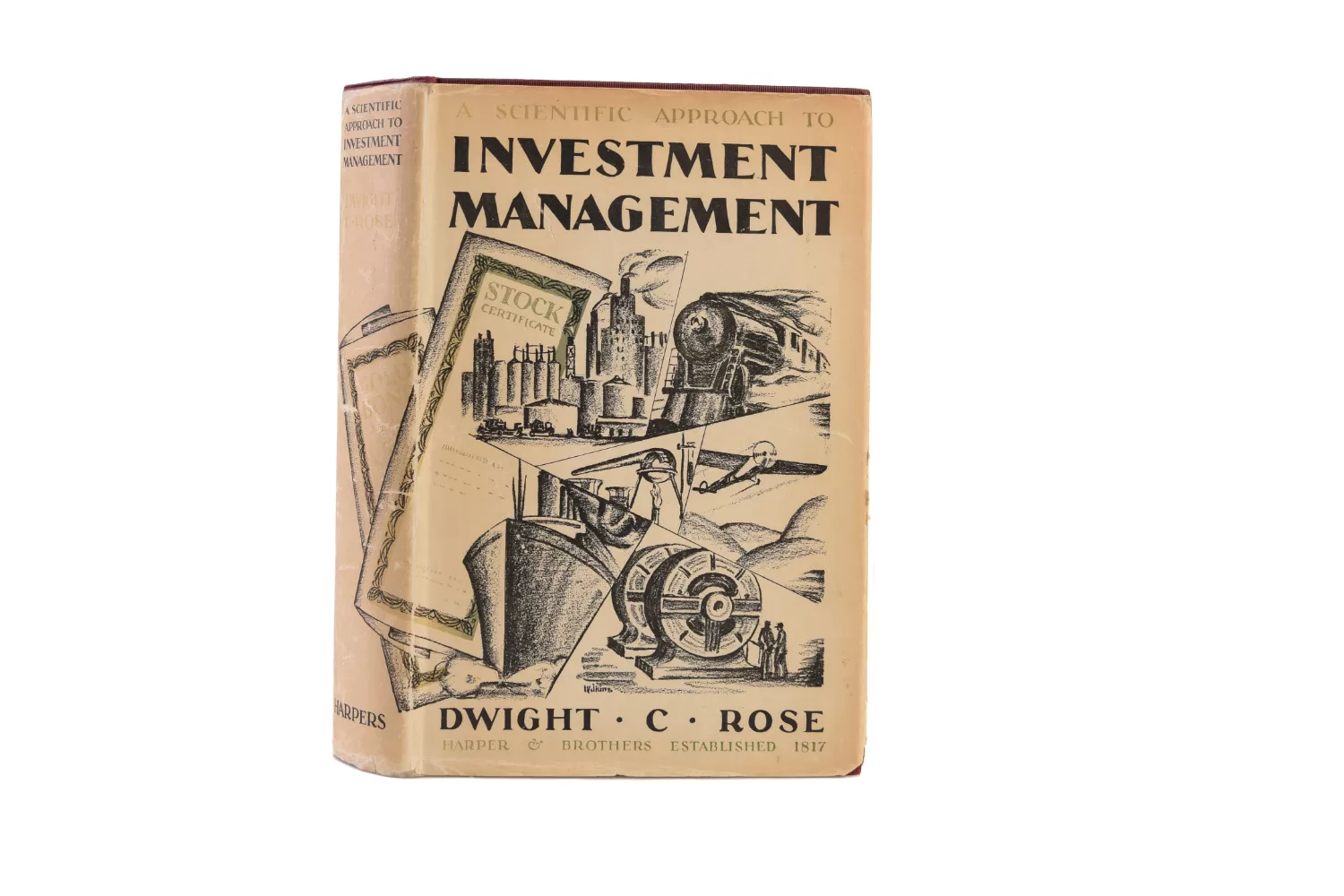
Investment Management: 98 Años Del Libro Pionero En Finanzas
On February 27, 1928, Dwight Rose published A Scientific Approach to Investment Management, a fundamental book in the world of finance. I discovered its practical advice.
-

Volkswagen: A 90 Años de su Terrorífico Surgimiento
On February 26, 1936, the result of an agreement between Ferdinand Porsche and the German government, the "people's car," Volkswagen, was born. Discover its dark history and how corporate responsibility is essential today.
-
Money Issue: Lessons from Lincoln and the Greenbacks in 1862
On February 25, 1862, U.S. President Lincoln signed a law authorizing the issuance of currency to finance the Civil War. Let's see what lessons we can learn from this currency issuance.


Aeronautics saving Apple Financial Advisor banks Berkshire Hathaway Stock market bonds bubble Dot-com bubble byma commodities South Sea Company Financial advice Cryptocurrencies crisis subprime crisis free finance course economy Start investing pyramid scheme USA Facebook finance Personal finances IBM inflation England finance books investment books LTCM financial mentoring Argentine market stock market international market Meta Microsoft Nasdaq Oil Russia Steve Jobs Technology value investing Wall Street Warren Buffett
