

April 21st anniversary
On April 21, 1946, John Maynard Keynes, a renowned British economist known for his economic ideas named Keynesian in his honor, died. Discover his story and who is one of his greatest critics.
John Maynard Keynes (1883–1946) was an influential British economist whose economic theory has shaped modern economic policy. Known as the principal architect of Keynesian economics, his ideas redefined the role of government in the economy and laid the groundwork for state intervention during times of recession. Keynes believed that in times of economic crisis, government intervention through public spending was critical to revitalizing the economy, as the market did not always automatically adjust to maintain full employment.
The Economic Theory of John Maynard Keynes
Keynes's theory, known as Keynesianism, argues that the business cycle is not self-regulating and that government intervention is crucial to prevent prolonged collapses. Keynes developed his ideas in response to the Great Depression of 1929, when Western economies were in crisis and classical economic models seemed inadequate.
- Aggregate DemandKeynes argued that aggregate demand (the total amount of spending in an economy) is the driving force behind economic growth. Unlike classical economists, who believed that supply created its own demand, Keynes argued that in times of crisis, private consumption and investment declined, leading the economy into a trap of unemployment and low growth. For him, in such situations, only government spending could compensate for the lack of private investment and stimulate the economy.
- The Role of the StateAccording to Keynes, the state should intervene in times of recession. He proposed that governments increase public spending and reduce taxes to stimulate demand. Keynes believed that fiscal deficits in times of crisis were not negative if they were used to reduce unemployment and revive the economy, since once the economy recovered, tax revenues would also grow, and the deficit could be corrected.
- Fiscal and Monetary PolicyIn addition to fiscal intervention, Keynes also promoted monetary policy as a tool to influence the economy. He believed central banks should lower interest rates during recessions to make lending more attractive and thus stimulate investment and consumption. However, he recognized the limits of monetary policy and defended fiscal policy as the primary means of intervention.
- Keynesian MultiplierKeynes introduced the concept of the multiplier, which indicates how government spending can have a multiplying effect on the economy. For example, if the government spends on infrastructure, this spending creates jobs and increases workers' incomes, who in turn increase consumption, thus generating more economic activity.
Keynes's Legacy and the World Economic Order
Keynesian theory was the basis of postwar policies in Western countries. Its influence was realized in the creation of institutions such as the International Monetary Fund (IMF) and the World Bank, established to promote economic stability and development, in accordance with Keynesian ideas of international cooperation and economic stability.

Argentine President Javier Milei's opinion on Keynes
Javier Milei, economist and president of Argentina, has a critical view of Keynes and Keynesianism. Known for his provocative style and rejection of interventionist economic theories, Milei has positioned himself as a staunch defender of libertarian ideas and economic liberalism.
- Criticism of State InterventionMilei argues that state intervention, as promoted by Keynes, is counterproductive and ends up causing more harm than good. For Milei, public spending is the root of many economic problems, especially in economies like Argentina, where the state has historically played a significant role.
- Defender of Economic LiberalismMilei is an advocate of laissez-faire principles and believes that the market is the best tool for allocating resources. He criticizes Keynes for his rejection of the theory of the self-regulating market, A position that Milei considers fundamental to economic freedom. According to him, the market economy is capable of self-regulation, and attempts at intervention only distort prices and cause inefficiencies.
- Questioning the Multiplier TheoryMilei believes that the Keynesian multiplier theory does not apply to contexts like Argentina, where public spending does not always translate into real economic growth, but often fuels deficits and inflation.
- Inflation and Monetary IssueMilei points out that the Keynesian approach leads to the issuance of money to finance public spending, which, in his opinion, is one of the main causes of inflation in Argentina. For Milei, the creation of unbacked money ends up devaluing the currency and causing inflation, a problem he attributes directly to Keynesian public spending policies.
- Replacing the Peso with the DollarMilei promotes dollarization of the Argentine economy, arguing that this would eliminate the possibility of uncontrolled currency issuance, something he associates with Keynesianism and its deficit spending policies. By dollarizing, Milei seeks to limit the state's ability to intervene in the economy through monetary policy. However, it has recently become less clear whether he ultimately wants to eliminate the Argentine peso or simply allow both currencies to coexist.

Lessons and Current Debate on Keynesianism
Keynesianism remains a topic of debate. In times of economic crisis, many nations implement fiscal and monetary stimulus measures inspired by Keynes's ideas, as was seen during the 2008 financial crisis and the COVID-19 pandemic. However, its criticism is also strong in contexts of high inflation, such as in Argentina.
Milei's analysis of Keynes and his emphasis on austerity and liberalism represents a contrasting economic vision that seeks to limit the role of the state in the economy. This generates an important debate in Argentina and other countries about the best way to achieve sustainable economic growth and control inflation.
You might also be interested in:
Both you and your company can also invest in quality companies.
See more notes from our blog:
-

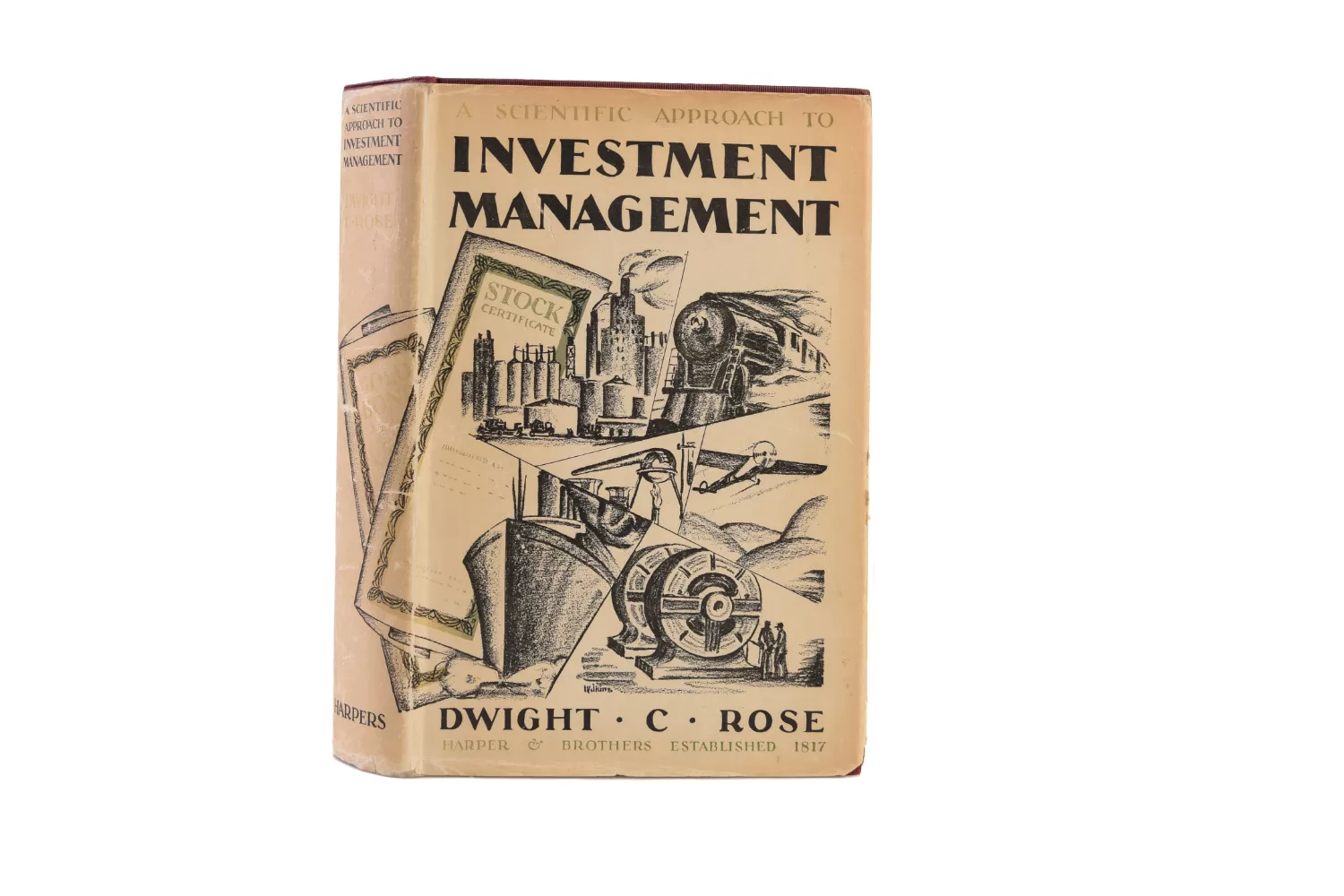
Investment Management: 98 Años Del Libro Pionero En Finanzas
On February 27, 1928, Dwight Rose published A Scientific Approach to Investment Management, a fundamental book in the world of finance. I discovered its practical advice.
-

Volkswagen: A 90 Años de su Terrorífico Surgimiento
On February 26, 1936, the result of an agreement between Ferdinand Porsche and the German government, the "people's car," Volkswagen, was born. Discover its dark history and how corporate responsibility is essential today.
-
Money Issue: Lessons from Lincoln and the Greenbacks in 1862
On February 25, 1862, U.S. President Lincoln signed a law authorizing the issuance of currency to finance the Civil War. Let's see what lessons we can learn from this currency issuance.


Blog Keyword Cloud:
Aeronautics saving Apple Financial Advisor banks Berkshire Hathaway Stock market bonds bubble Dot-com bubble byma commodities South Sea Company Financial advice Cryptocurrencies crisis subprime crisis free finance course economy Start investing pyramid scheme USA Facebook finance Personal finances IBM inflation England finance books investment books LTCM financial mentoring Argentine market stock market international market Meta Microsoft Nasdaq Oil Russia Steve Jobs Technology value investing Wall Street Warren Buffett
