
On May 6, 1964, Seabury Stanton, the then president of Berkshire Hathaway, sent a letter to the company's shareholders that would be a turning point in the company's history. In that letter, Stanton offered to sell the company to the shareholders, suggesting that investors could sell their shares at a price of $11.50 per share. However, it was this very letter that made a young man Warren Buffett, who had already invested in Berkshire Hathaway, made a decision that would change his life and the direction of the company.
The Context of the Letter
In the preceding years, Berkshire Hathaway was a textile company that had performed relatively mediocrely. The textile sector was suffering from competition, and the company wasn't generating the expected returns. Seabury Stanton, who was in charge of the company, decided to make an offer to buy back the shares from the shareholders at a higher price than they were selling for on the market.
Stanton's goal was to simplify the company's structure and reorganize its strategy, but the proposal wasn't a measure that excited all shareholders, many of whom weren't interested in holding onto their shares in a company that wasn't performing remarkably well.
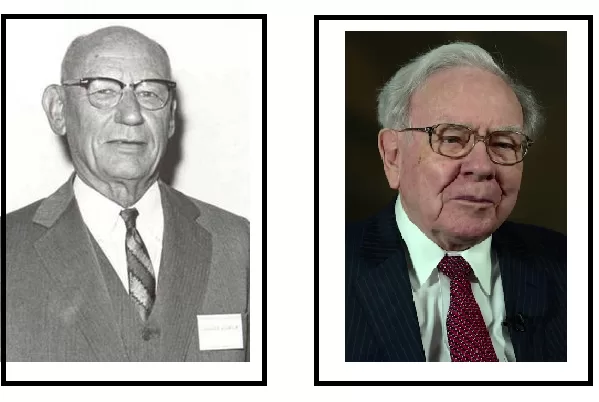
Warren Buffett's Reaction
Then, Warren Buffett He was already a shareholder in Berkshire Hathaway, but he didn't control the company. He had a clear investment strategy and was looking for companies that had an intrinsic value higher than their market value. When Buffett saw the offer, $11.50 per share, immediately recognized that this figure was below the real value of the company, especially since he had analyzed Berkshire's assets and realized that The value of the company's investments far exceeded that price.
Buffett had already begun studying the company since the early 1960s, and as for his underlying assets (such as his investments in the textile business), he recognized that there was an opportunity. Instead of selling his shares, as the offer suggested, Buffett decided take advantage of the opportunity to buy more shares Berkshire Hathaway. At the time, the stock price was far below its true value, according to Buffett's analysis.

How Warren Buffett Seized the Offer
Despite the buyback offer at a price that seemed attractive to many investors at the time, Buffett saw the company's long-term potential. He decided to buy more shares of the company at $11.50 per share, a price that he considered a bargain in relation to asset values and future opportunities.
What Buffett did was use his approach of long-term investment, looking for companies that were undervalued in the market. His goal was to acquire more control of the company, with the vision that, in the future, Berkshire Hathaway could be much more than a textile company. What at the time seemed like a struggling company, Buffett saw as a basis for new acquisitions and to invest in more profitable businesses.
At that point, Warren Buffett already had a significant control about the company and used his value investing strategy to influence the direction of the company. As he accumulated more shares, he could gain power within Berkshire Hathaway and eventually take the reins of the company, restructuring its operations and steering it toward the insurance business and other more profitable sectors.

The Result of the Purchase
Warren Buffett's decision to buy more shares Berkshire Hathaway's investment was pivotal in his career, and as we know today, this investment move was extraordinarily successful. Over time, Buffett completely transformed the company, taking it from a declining textile company to one of the largest and most successful companies in the world. In addition, the decision to take advantage of the offer of $11.50 per share resulted in exponential profits for Buffett, since Berkshire Hathaway shares are now worth hundreds of thousands of dollars.
The event is also a reflection of the long-term approach and the financial discipline that Buffett has always championed throughout his investment career. Rather than giving in to a buyback offer that many considered attractive, Buffett saw the company's true value and seized an opportunity to consolidate his stake and take control of what would become his business empire.

Lessons for Investors
The story of how Warren Buffett took advantage of Seabury Stanton's offer to buy more Berkshire Hathaway shares in 1964 offers several important lessons for investors:
- Intrinsic ValueBuffett has always emphasized the importance of analyzing a company's true value before making investment decisions. Even if the market offers low prices, this doesn't mean a company is overvalued. It's essential to calculate its true and potential value.
- Patience and Long-Term VisionBuffett's ability to see beyond Berkshire Hathaway's immediate problems and focus on future potential was one of the reasons for its success. Investors often need to be patient and take a long-term view.
- Seize Opportunities: When others see uncertainty or problems, Buffett knows how to identify investment opportunities that others overlook. This ability to take advantage of low prices is one of the reasons he's been so successful throughout his career.
In short, the letter of Seabury Stanton It was a crucial moment in the history of Berkshire Hathaway, but for Warren Buffett, represented an opportunity that he took advantage of with great vision and strategy. The decision not to sell, but to buy more shares At a low price, it became one of the smartest moves of his career, transforming his initial investment into one of the largest financial empires in the world.
Both you and your company can also invest in quality companies.
See more notes from our blog:
-

Sir Isaac Newton: The Brilliant Scientist, Theologian, and Investor
On March 31, 1727, Sir Isaac Newton, one of the most important scientists in history, died. However, his legacy extended beyond science, but also to investment and even religion.
-

Priceline.com's Incredible IPO and the 5 Lessons It Leaves for Investors
On March 30, 1999, Priceline.com's initial public offering (IPO) took place. Trading began at $16 and closed at $69, tripling the profits of its initial investors. At the time, the company was trading at a higher price than United Airlines, Continental Airlines, and Northwest Airlines combined, a clear…
-
Who is Doctor Catastrophe and his surprising prophecy?
Nouriel Roubini, an American economist known for his apocalyptic predictions and nicknamed "Doom," was born on March 29, 1959. Discover his story and how what he predicted came to pass in a shocking way.


Aeronautics saving Apple Financial Advisor banks Berkshire Hathaway Stock market bonds bubble Dot-com bubble byma commodities South Sea Company Financial advice Cryptocurrencies crisis subprime crisis free finance course economy Start investing pyramid scheme USA Facebook finance Personal finances IBM inflation England finance books investment books LTCM financial mentoring Argentine market stock market international market Meta Microsoft Nasdaq Oil Russia Steve Jobs Technology value investing Wall Street Warren Buffett
