
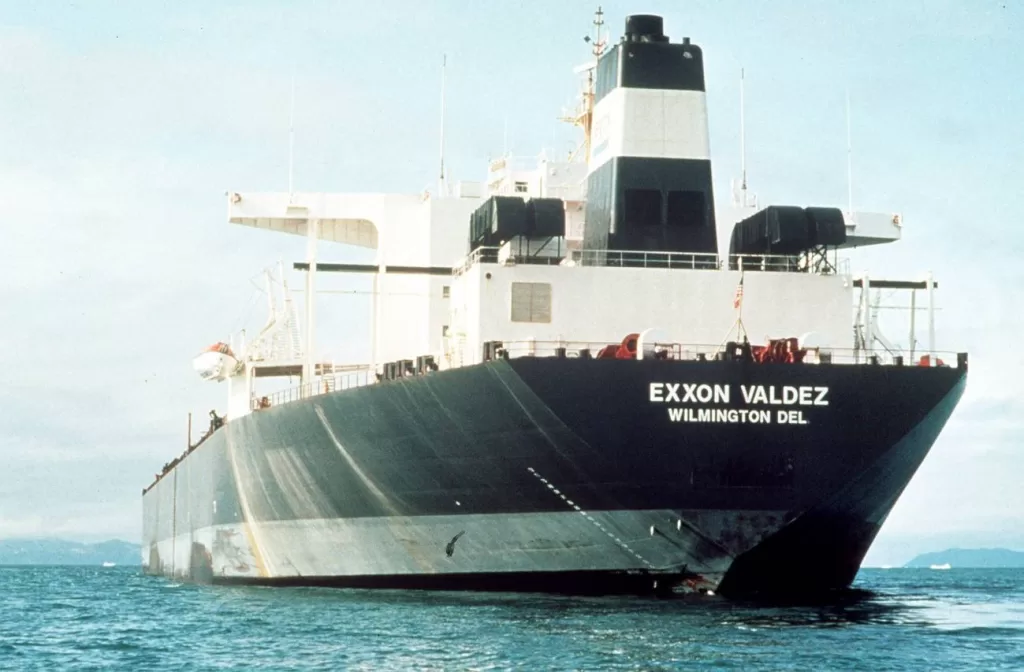
The story of the supertanker Exxon Valdez It is one of the most tragic and emblematic of modern environmental disasters, and its consequences and legal repercussions redefined the way corporate responsibility is handled in the oil industry. In 1990, the spill became a multi-million-dollar legal and liability case, culminating in the condemnation of the company's capital in a verdict that changed environmental regulations.
Background of Exxon and the Exxon Valdez
Exxon Corporation (today ExxonMobil) is one of the world's largest oil companies. Founded as part of the Standard Oil Company John D. Rockefeller's company, Exxon consolidated its position in the early 20th century and rapidly expanded worldwide, extracting and producing oil. By the mid-20th century, the company was a leader in hydrocarbon exploration, production, and distribution. However, this expansion also placed it at the center of several environmental controversies.
He Exxon ValdezLaunched in 1986, it was one of the supertankers Exxon used to transport oil from Alaska to other parts of the world. With a capacity of 1.48 million barrels of oil, this large, technologically advanced vessel was considered safe and reliable for long-distance crude transport.
The Accident: March 24, 1989
The disaster of the Exxon Valdez The voyage began on the night of March 24, 1989. The supertanker was loaded with over 1.2 million barrels of crude oil from the Valdez oil terminal in Alaska and headed toward the west coast of the United States. As the vessel proceeded, Captain Joseph Hazelwood, who had a history of alcohol use and several disciplinary problems, decided to change course to avoid pack ice in the Valdez Sound. However, after a series of poor decisions and lack of proper supervision, the Exxon Valdez ran aground on Bligh Reef, a highly sensitive and protected area of the marine ecosystem.
The collision with the reef ruptured several of the supertanker's storage tanks and caused a massive spill. Within hours, more than 10.8 million gallons of crude oil sprayed into the water, quickly covering a vast expanse of the Alaskan coastline. The magnitude of the disaster exceeded all expectations, and the environmental damage was devastating. In total, the spilled oil is estimated to have covered approximately 2,100 kilometers of coastline and contaminated up to 28,000 square kilometers of ocean.
Environmental Consequences
The environmental impact was catastrophic and almost immediate. Alaska's pristine waters were home to thousands of marine species, including fish, mammals, and birds. The affected ecosystems would take decades to recover, and some animal populations have yet to fully recover. Among the most affected species were:
- Birds and seabirdsBirds, which rely on their feathers to keep them warm and float, were among the first to suffer the consequences of the spill. An estimated 250,000 birds died due to the contamination, as the oil prevented them from flying and soaked their feathers, causing hypothermia and difficulty moving.
- Marine mammalsAmong the marine mammal species affected were otters, seals, and orcas. Sea otters, for example, saw a significant decline in their population because their fur was soaked with crude oil, and when they tried to clean themselves, they ingested oil. Orcas, another severely affected group, experienced a considerable decline in their population due to the spill.
- Fish and other marine organismsFish populations, especially salmon and herring, also declined significantly. These fish are of great importance to the local economy and the food supply of several species in the ecosystem. The decline in fish numbers affected the entire food chain in the area, negatively impacting bird populations, bears, and other predators.
- Vegetation and habitatsThe oil covered the seabed of beaches and coastal areas, poisoning vegetation and disrupting the habitats of numerous marine species. Coastal cleanup also proved challenging, and the cleanup methods used in some areas, such as the use of high-pressure hot water, also had detrimental effects, harming local flora and fauna.
You may also be interested in:
Exxon's Response
Exxon was criticized for its slow response and lack of preparation for a disaster of this magnitude. The company lacked an adequate emergency plan for oil spills, and the equipment initially deployed was insufficient. As the days passed and the magnitude of the disaster became clear, Exxon ramped up its cleanup efforts. The company ultimately spent around $2 billion on cleanup efforts, hiring thousands of workers and deploying ships, helicopters, and specialized equipment to try to mitigate the damage.
Despite their efforts, the cleanup was not completely effective. Some of the oil remained on Alaska's beaches and waters for years, and the long-term effects of the spill would remain visible for decades. The population of some species has still not fully recovered, and local communities, which depended on fishing and tourism, experienced an economic decline that affected their livelihoods for years.

Trials and the Captain's Conviction in 1990
The spill of the Exxon Valdez This led to multiple lawsuits against Exxon, filed by both the U.S. government and the state of Alaska and several private and tribal groups. Fishermen, tourism companies, and local residents also sued the company for economic and environmental damages caused by the spill.
One of the most important cases was the trial that resulted in the condemnation of Exxon's capital. In 1990, a court ruled against the company, ordering it to pay $1 billion in compensatory damages and $5 billion in punitive damages. However, the legal battle continued for several years, and Exxon repeatedly appealed the ruling. Finally, in 2008, the punitive damages were reduced by the U.S. Supreme Court to $507 million, a fraction of the amount originally ordered.
In addition to the fines and penalties, the spill of the Exxon Valdez It also led to a significant review of environmental safety regulations in the United States. In 1990, the Hydrocarbon Pollution Law (Oil Pollution Act), which established stricter requirements for crude oil transportation companies, including the need for spill response plans and increased funding to cover potential environmental damage.

Lessons Learned and the Legacy of Exxon Valdez
The disaster of the Exxon Valdez It had a lasting impact on the oil industry and on public awareness of the importance of environmental protection. The regulations that emerged as a result of the accident have helped prevent future oil spills and have increased companies' responsibility to protect the environment.
The case of the Exxon Valdez It also served as a reminder of the inherent risks of the oil industry and the need for effective emergency response mechanisms. Furthermore, the economic and social impact of the disaster highlighted the importance of considering the interests and well-being of local communities in energy industry operations.
Worldwide, the Exxon Valdez remains a symbol of the dangers of oil transportation, and its story has served as a warning to both companies and regulators around the world. Although ExxonMobil remains one of the largest energy companies today, the disaster Exxon Valdez It remains a reminder of the consequences that can arise from a lack of environmental responsibility and of the importance of prevention and emergency preparedness.
Final Reflection
He Exxon Valdez transformed the oil industry and public perceptions of the dangers of crude oil transportation. Over time, advances in spill response technology and stricter laws have helped reduce the likelihood of a disaster of that magnitude. However, the Exxon Valdez It remains a warning about the risks of oil and the fragility of the ecosystems that depend on our commitment to their protection and preservation. And finally, while the goal of companies is to make money, it can never come at the expense of the environment, flora, fauna, and people.
Both you and your company can also invest in quality companies.
See more notes from our blog:
-

The Remarkable Impact on Microsoft of Bill Gates' Resignation in 2000
On January 13, 2000, Bill Gates stepped down as CEO of Microsoft to focus on his philanthropic work. Let's see how Microsoft fared after his departure.
-

The Incredible Story of Jeff Bezos and the Amazon Foundation
On January 12, 1964, Jeff Bezos was born. He transformed e-commerce by founding Amazon from a garage. His vision and innovation redefined shopping and marked a milestone in the industry.
-

The Dow Jones and the Shocking Post-World War II Economic Recovery in 1946
On January 11, 1946, the Dow Jones finally surpassed its peak during the Great Depression. Let's look at what happened during those 19 years of economic recovery.



Aeronautics saving fundamental analysis fundamental analysis Apple Financial Advisor banks Berkshire Hathaway Stock market bonds bubble Dot-com bubble byma commodities South Sea Company Financial advice Cryptocurrencies crisis subprime crisis free finance course economy Start investing pyramid scheme USA scams Facebook finance Personal finances inflation England finance books investment books LTCM financial mentoring Argentine market stock market international market Microsoft Oil Russia Steve Jobs Technology value investing Wall Street Warren Buffett
