

He January 26, 2000, Wall Street became the scene of a rare and meaningful event: a concert of Rage Against the Machine, one of the most influential and provocative rock bands of the era. This show not only represented a musical manifestation but also symbolized the growing tension between punk culture and the capitalist system the band criticized. What began as a musical event soon became a powerful political statement, taking place at a time of rising social and economic tensions.
Socioeconomic Context
In the late 1990s, the United States was experiencing a period of economic expansion driven by the rise of technology and the growth of dot-com companies. However, this growth was not without its challenges. As corporations prospered, income inequality also increased. Profits were concentrated in the hands of a few, while many workers faced job insecurity and stagnant wages. Rage Against the Machine, known for its political activism, opposed this dynamic, arguing that capitalism was failing to meet the needs of the majority.
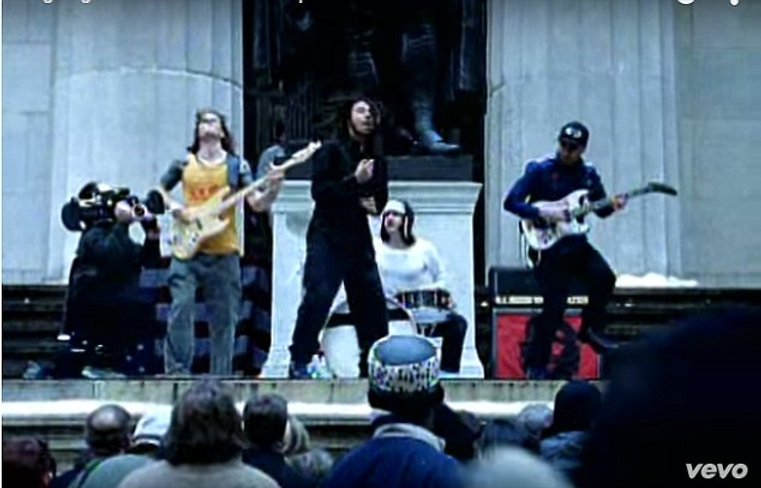
The Protest on Wall Street
The concert was organized at a time when pressure on Wall Street was mounting. Rage Against the Machine joined forces with various activist organizations and unions to take their message of protest directly to the heart of American financial activity. The band had used their music to address issues of social and economic justice, and this performance on Wall Street was an extension of their commitment.
During the concert, Rage Against the Machine performed some of their most iconic songs, such as "Killing in the Name" and "Guerrilla Radio." The band not only put on a musical performance but also used the platform to speak out about corporate corruption, greed, and the injustices faced by workers. The energy in the venue was palpable, with thousands of fans and supporters gathering to hear their message.
The Immediate Effect on Wall Street
What began as a protest and music event soon had an immediate impact on Wall Street. Rage Against the Machine's performance drew a significant crowd, resulting in a surge in media attention. The noise and commotion raised concerns among authorities and stock exchange executives, who were anxious to maintain safety and order in the area.
As the crowd grew, tensions escalated. The situation became so intense that authorities decided to temporarily close the New York Stock Exchange to prevent potential riots. This unexpected closure was a testament to the power that music and activism can have in a place normally dedicated to commerce and the economy.

Sleep Now in the Fire: The Inspiration Behind the Song
Rage Against the Machine's performance on Wall Street wasn't just a one-off event; it also served as a catalyst for the creation of their song «Sleep Now in the Fire», which was released in 2000 as part of the album «Renegades»The song's lyrics address themes of corporate greed, inequality, and social discontent, reflecting the same energy and spirit of protest the band displayed during the concert.
In the music video for "Sleep Now in the Fire," directed by renowned filmmaker Michael Moore, the band can be seen playing at the New York Stock Exchange, interspersed with footage of protests and criticism of corporations. This video not only captured the essence of the Wall Street protests but also amplified the song's message to a wider audience. The combination of music and visual imagery helped cement Rage Against the Machine's reputation as one of rock's boldest and most provocative voices.
Consequences of the Concert and Activism
Rage Against the Machine's performance on Wall Street wasn't a one-off event. It marked the beginning of a series of protests and social movements that would intensify in the following years. Outrage over corporate greed and economic inequality continued to grow, and the band became a symbol of this struggle.
The response of corporations and the government to the growing dissent was a combination of repression and disdain. Large companies and politicians began to recognize the impact of the protests and activism. Concerns about public image and shareholder pressure led some companies to change their policies, although many critics argued that these changes were more symbolic than substantive.

Final Reflections
January 26, 2000, was a day when music and politics intersected in a significant way. Rage Against the Machine used their platform to challenge the system and advocate for greater social justice, making a tangible impact at the heart of American capitalism. The decision to shut down Wall Street for the concert not only underscored the band's influence but also revealed the simmering tensions within society.
You might also be interested in:
Both you and your company can also invest in quality companies.
See more notes from our blog:
-

Windows Vista: A 19 Años de la Salida del Sistema Operativo Más Odiado
On January 30, 2007, Windows Vista was launched, a new Microsoft operating system that promised to replace the beloved Windows XP. However, things didn't go as expected. Let's see what happened.
-

02 – The Importance of Financial Planning and Its Surprising Effect on Your Life
In this lesson, we'll discuss the importance of budgeting and planning your finances. We'll explore the different types of budgets, how to identify variable expenses and income, and strategies for achieving financial goals.
-

Explosión del Challenger: A 40 Años del Impactante Accidente Espacial y sus Consecuencias en la Bolsa
On January 28, the Challenger explosion occurred. Just seconds after takeoff, the spacecraft exploded, killing all its crew members instantly, before the eyes of millions of spectators. Let's look at this tragic event and what we can learn from it.


Aeronautics saving fundamental analysis Apple Financial Advisor banks Berkshire Hathaway Stock market bonds bubble Dot-com bubble byma commodities South Sea Company Financial advice Cryptocurrencies crisis subprime crisis free finance course economy Start investing pyramid scheme USA scams Facebook finance Personal finances IBM inflation England finance books investment books LTCM financial mentoring Argentine market stock market international market Microsoft Oil Russia Steve Jobs Technology value investing Wall Street Warren Buffett
